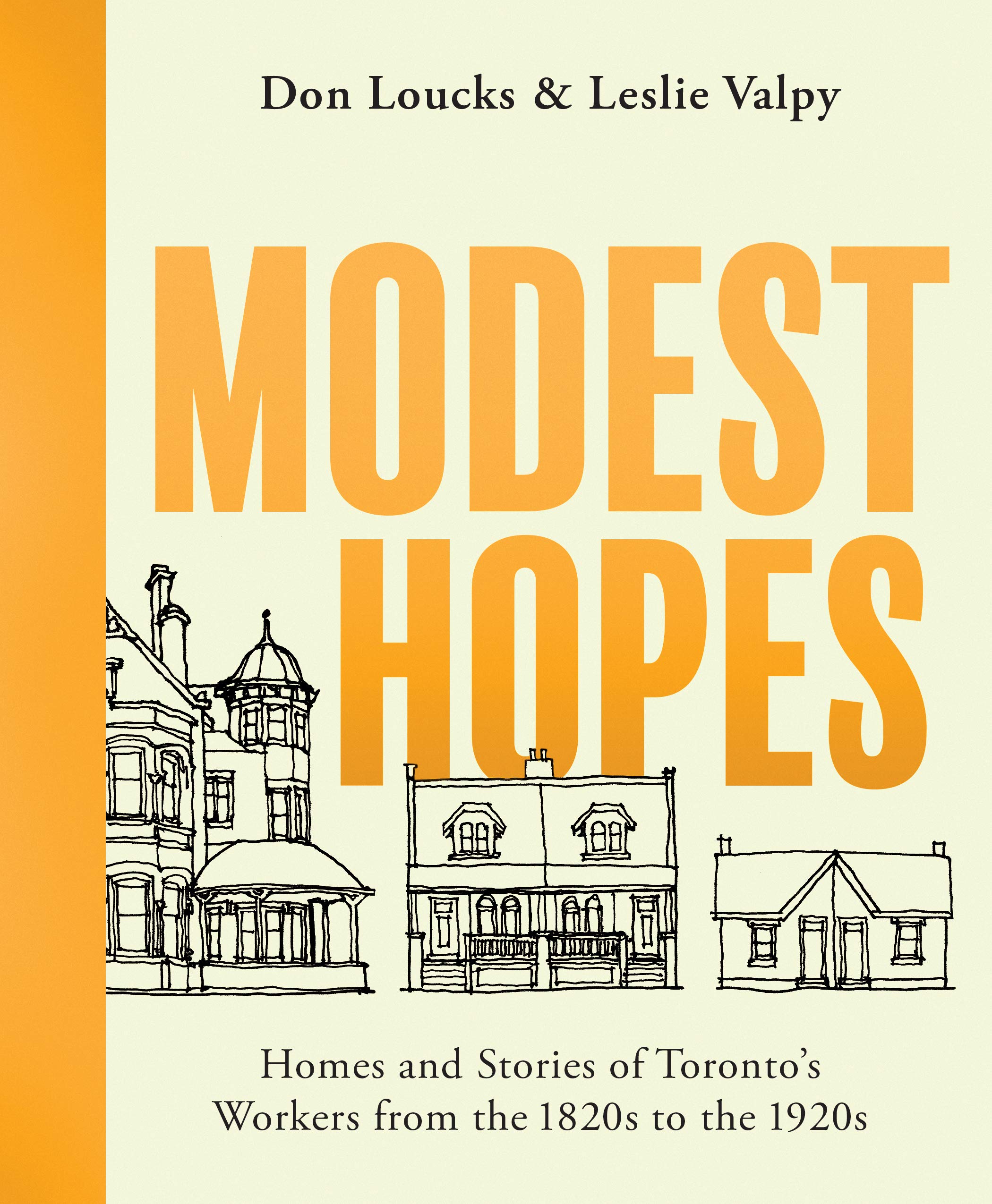
Modest Hopes: Homes and Stories of Toronto's Workers from the 1820s to the 1920s
Modest Hopes: Homes and Stories of Toronto's Workers from the 1820s to the 1920s
OTHER ARTICLES

Celebrating the row houses, semis, and cottages that are an important but forgotten part of the Toronto narrative.Too often workers’ cottages are characterized today as being small, cramped, poorly built, and disposable. But in the late 1800s, to have worked and saved enough money to move into one was an incredible achievement. Moving from the crowded conditions of boarding houses, or areas such as Toronto’s Ward or Ashport’s “shanty-town,” to a self-contained, six-hundred-square-foot row house was the result of an unimaginably strong hope, belief, and commitment for the future.For the workers and their families, these houses were far from modest. The architectural details of these cottages suggested status, value, and pride of place they reminded them of where they had come from, with architectural roots from their homeland. These “modest hopes” are an under-valued heritage resource and an important but forgotten part of the Toronto narrative about the people who lived in them and who built our city.

No comments:
Post a Comment